
A Seed of the Word That Could Not Be Burned
In the previous root.log, we explored the life and theology of Martin Luther, the central figure of the Reformation. Yet Luther was not its point of origin. He stood at the crest of a long accumulation of questions, protests, and convictions that had been forming for generations. Long before Luther, there were those who looked squarely at the corruption of the Church and called for a return to Scripture and to the sovereignty of God.
Among them stands John Wycliffe, often called “the Morning Star of the Reformation.” His name is far less familiar than Luther’s, yet he was one of the earliest figures to till the theological soil from which the Reformation would later emerge.
An Obscure Beginning, Yet a Man of His Time
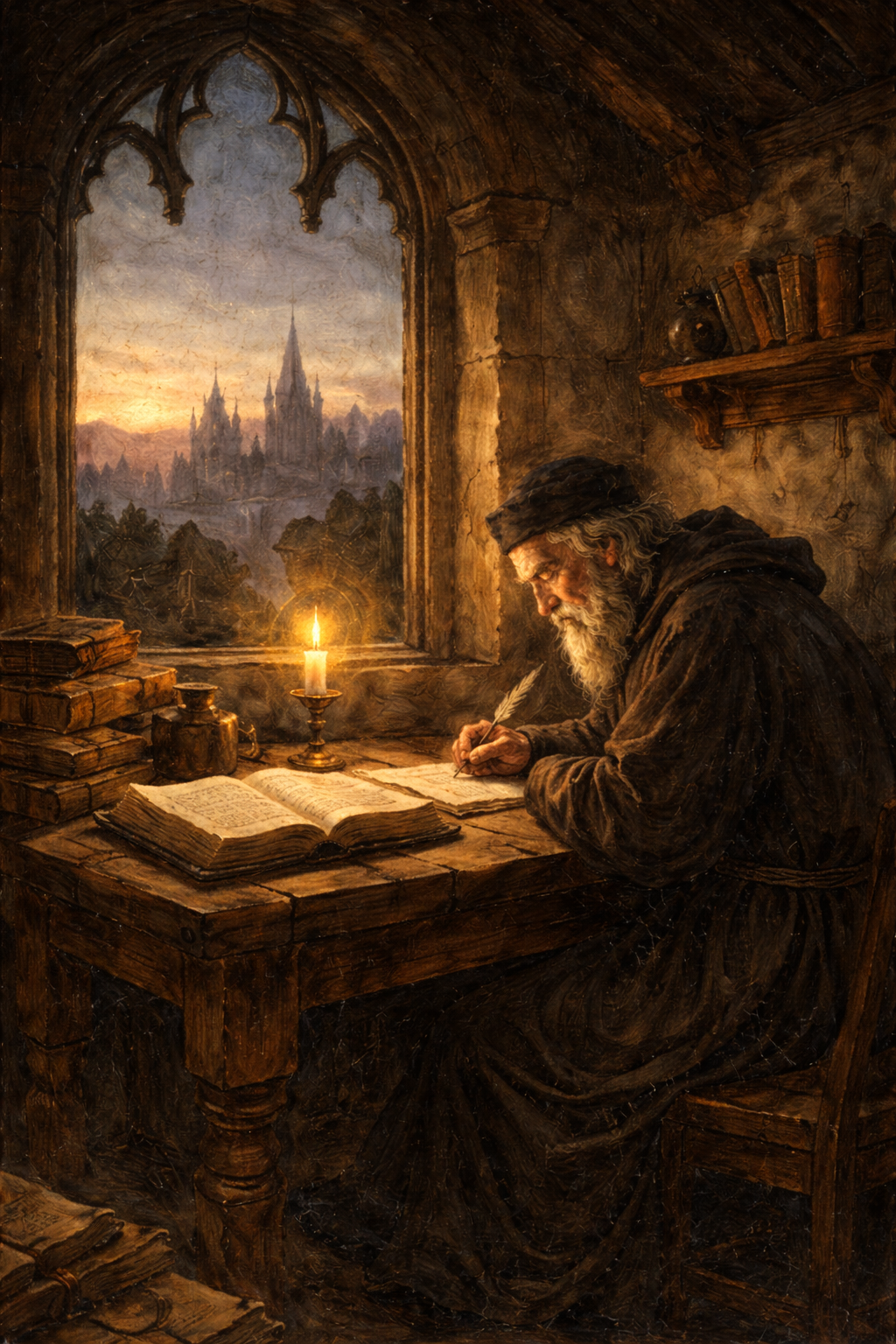
Wycliffe was a respected priest and a renowned professor at Oxford, known for his mastery of both philosophy and theology. After his death, however, he was condemned as a heretic by the Roman Catholic Church. The persecution that followed extended even to his family and relatives, and many records connected to him were deliberately destroyed. As a result, the details of his birth and early childhood remain unclear.
What can be known is this: he was likely born around 1324, during the reign of Edward II, into a minor landowning family in Yorkshire, England.
Theological Roots Formed at Oxford
Wycliffe entered Oxford University around the age of sixteen. At the time, Oxford was a place where traditional medieval scholasticism coexisted with new intellectual currents. The influence of thinkers such as Roger Bacon and William of Ockham still lingered—figures who challenged abstract speculation and emphasized experience and observation.
Ockham, in particular, was known for his sharp criticism of papal luxury and corruption, and for his emphasis on God’s absolute freedom and sovereignty. Yet Wycliffe went further, deeply absorbing the Augustinian tradition—especially its teaching on grace and predestination. Through thinkers like Robert Grosseteste and Thomas Bradwardine, he came to affirm that human salvation rests not on human judgment or merit, but entirely on the sovereign grace of God.
At this point, Wycliffe’s theology clearly anticipates the heart of later Reformation—and especially Reformed—thought.
A Public Confrontation with Ecclesiastical Corruption
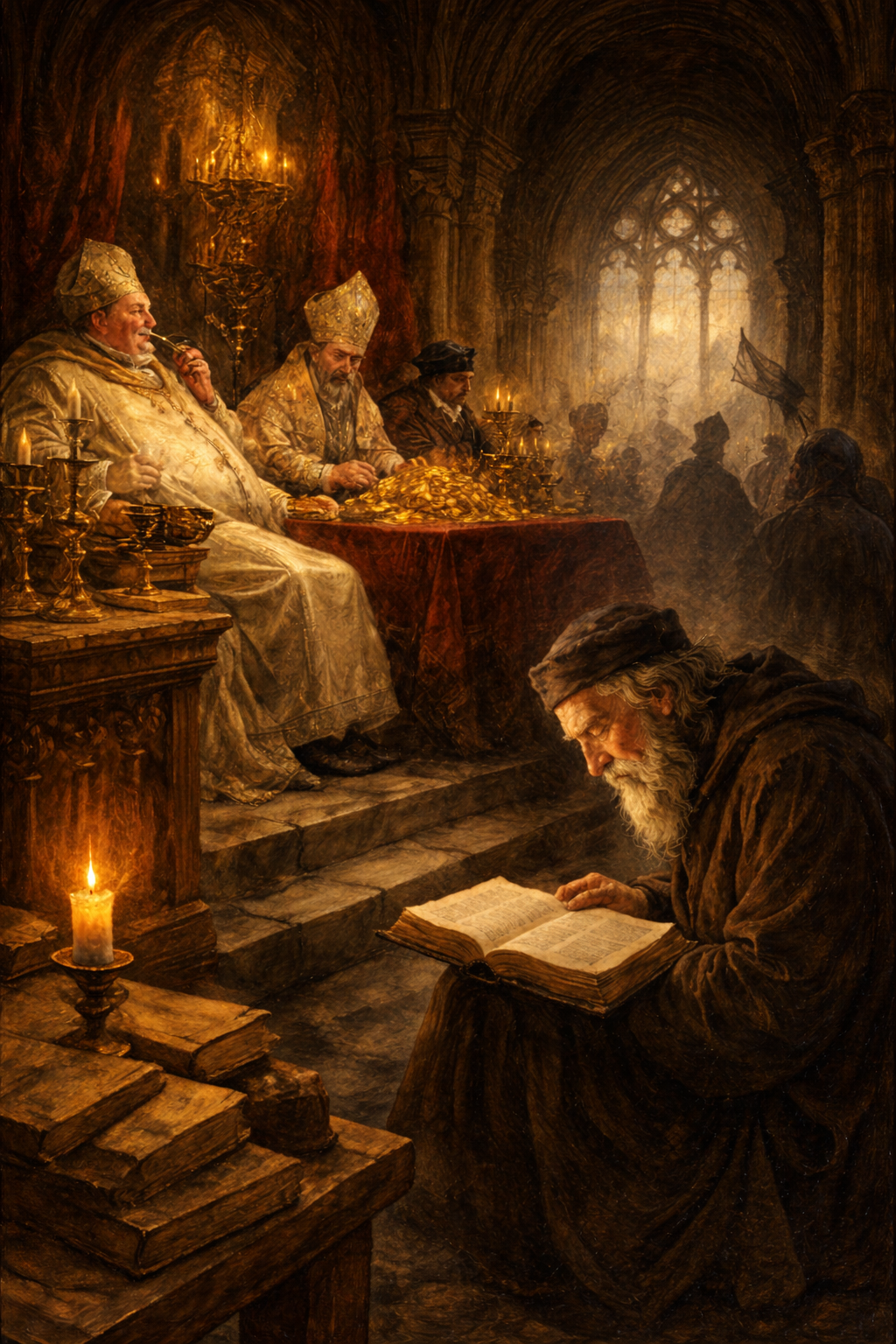
Wycliffe first gained widespread attention at Oxford through his criticism of the mendicant friars. These friars, who lived by begging and were shielded by papal authority, struck Wycliffe as a vivid symbol of the Church’s moral decay. He openly denounced them as a disgrace to society, and his words soon carried political consequences.
England’s nobility and monarchy, already frustrated by papal interference and financial demands, welcomed Wycliffe’s arguments. Serving as a theological advisor to King Edward III, Wycliffe wrote works such as On the Dominion of God and On Civil Dominion, arguing that all authority ultimately derives from God’s rule. He asserted the superiority of royal authority over papal power and fiercely criticized the Church’s accumulation of wealth.
These ideas earned him the support of both common people burdened by taxation and nobles who stood to gain from ecclesiastical reform.
A Resolve to Return hi to the Word

For Wycliffe, reform was not primarily about dismantling institutions, but about restoring the Word. He challenged a Church that confined Scripture to Latin and insisted that the Bible must be accessible to the people. His decision to translate Scripture into English was not merely a linguistic project—it was a theological declaration: the Word belongs to God, not to the Church, and the Church’s calling is to proclaim it, not to possess it.
He also rejected the doctrine of transubstantiation, emphasizing that true worship lies not in elaborate ritual but in faithful belief and understanding. Such claims struck at the very foundations of ecclesiastical authority, and eventually led to his formal condemnation as a heretic.
Persecution After Death, and the Failure of Silence
Wycliffe died in 1384 in his parish of Lutterworth. Yet death did not bring closure. In 1415, the Council of Constance officially condemned him as a heretic. Thirteen years later, his remains were exhumed, burned, and the ashes scattered into a river.
But this act of erasure became, instead, a testimony. The attempt to silence Wycliffe only revealed how far his ideas had already traveled. Human bones could be reduced to ash, but the Word of God—and the truth borne from it—could not be destroyed.
Conclusion: The Question Left by the Morning Star

Wycliffe did not complete the Reformation. He opened its dawn. He was among the first to ask—publicly and at great cost—questions that still confront us today: “Who does the Church belong to? Where does true authority reside? Under whose sovereignty does salvation stand?”
These questions remain painfully relevant. Are we guarding the Church—or merely its institutions? Are we proclaiming the Word—or hoarding it? The Morning Star of the Reformation has long since set. But the questions his light revealed have yet to fade.
About Author

faith.log
A journal that connects faith and everyday life. In each small piece of writing, we share the grace of God and the depth of life together.
'EN Edition' 카테고리의 다른 글
| start.log | Let Us Begin Again ⓪ A Place to Examine Our Faith (0) | 2026.01.01 |
|---|---|
| desk.log | An App That Enhances Focus <Portal – Escape into Nature> (0) | 2025.12.20 |
| step.log | Walking the History of Korean Christian Mission in Seoul (0) | 2025.12.15 |
| read.log | What ≪A Christmas Carol≫ Asks of Us Today: Returning to the Heart of (1) | 2025.12.10 |
| view.log | Two Stages of Faith in December (0) | 2025.12.05 |


